We Make Future
June 25th. BolognaFiere. Three days of WMF — We Make Future, one of the largest AI and innovation festivals in Europe, and I was there for one of them.
If you haven’t heard of it: WMF is a trade fair and festival that takes over Bologna every year with 90+ stages, over a thousand speakers, and an expo floor that spans everything from agentic AI and machine learning to robotics, fintech, digital health, and beyond. OpenAI, Google, NVIDIA, Anthropic — the names you’d expect — but also startups, institutions, creators, and a crowd that actually cares about where technology is going.
I went in not knowing exactly what I’d take home. I left with a camera roll full of robots and a head full of conversations.
The Floor
The scale hits you immediately. BolognaFiere is huge, and WMF fills it — mainstages with blue spotlights cutting through the dark, discovery areas with pink carpets and illustrated backdrops, booths stacked side by side until the hall feels endless.
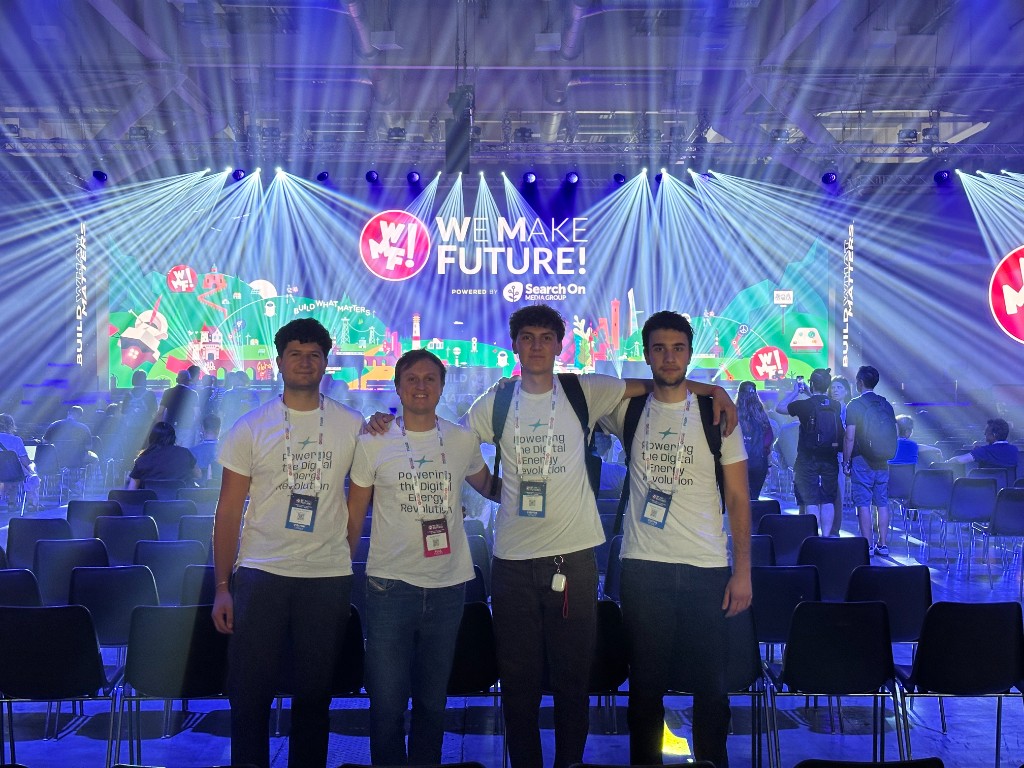
This isn’t a conference where you sit in one room and listen. It’s a festival. You walk, you stop, you get pulled into something interesting, you keep moving. The energy is closer to a music event than a corporate keynote — except what’s on stage is the future of work, AI governance, and physical robotics.
Robots Everywhere
The robotics section was easily the highlight for me.
Not demos on a screen. Actual hardware — arms, humanoids, prototypes behind barriers with crowds three rows deep trying to get a look. There’s something different about seeing a robot in person. You understand the weight of it, the precision of the joints, the gap between “cool video on Twitter” and “this thing is standing in front of me.”
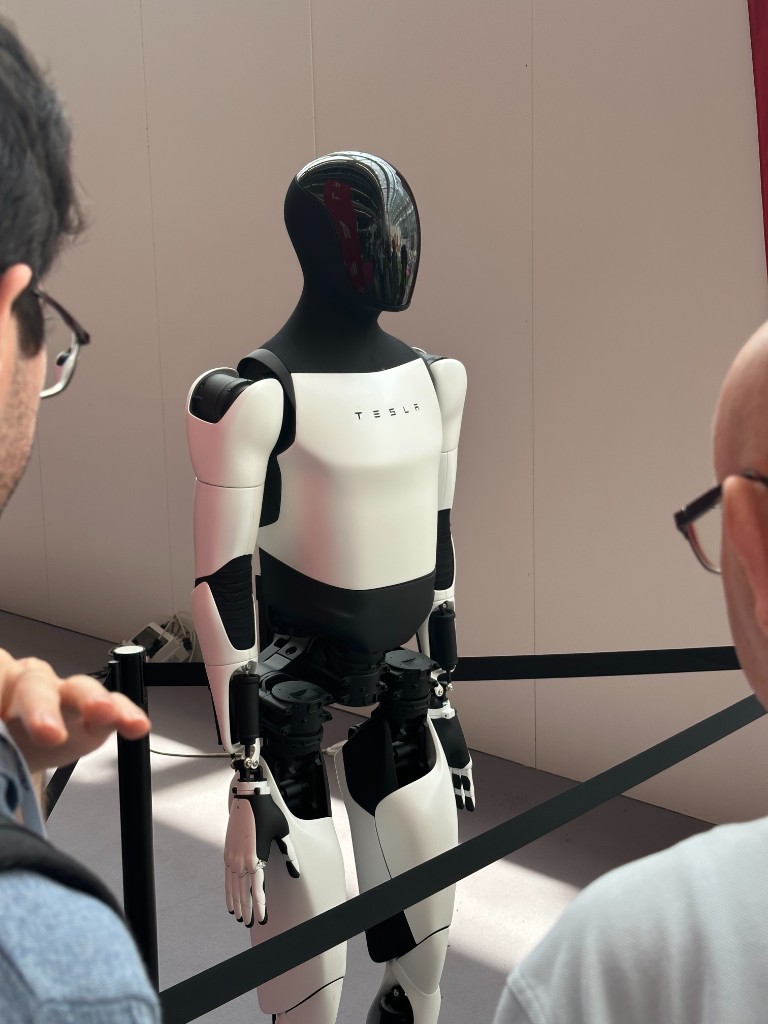
Tesla’s Optimus was there — glossy black head, white chassis, the word TESLA across the chest like it was always meant to be read from across a convention hall. People stopped. Stared. Took photos. Nobody pretended it wasn’t impressive.
WMF had dedicated stages for Robotics & Physical AI this year, and you could feel why. The conversation has moved beyond chatbots and image generators. The next frontier is physical — machines that see, move, and act in the real world. Walking through that part of the expo felt like peeking five years into the future.
People, Not Just Products
The best part of any event like this isn’t the booths. It’s the people.
I ran into Jakidale — one of the most recognizable tech YouTubers in Italy — and we grabbed a quick selfie between sessions. When someone who’s built an audience around making technology accessible is at the same festival as you, it’s a good sign you’re in the right place.
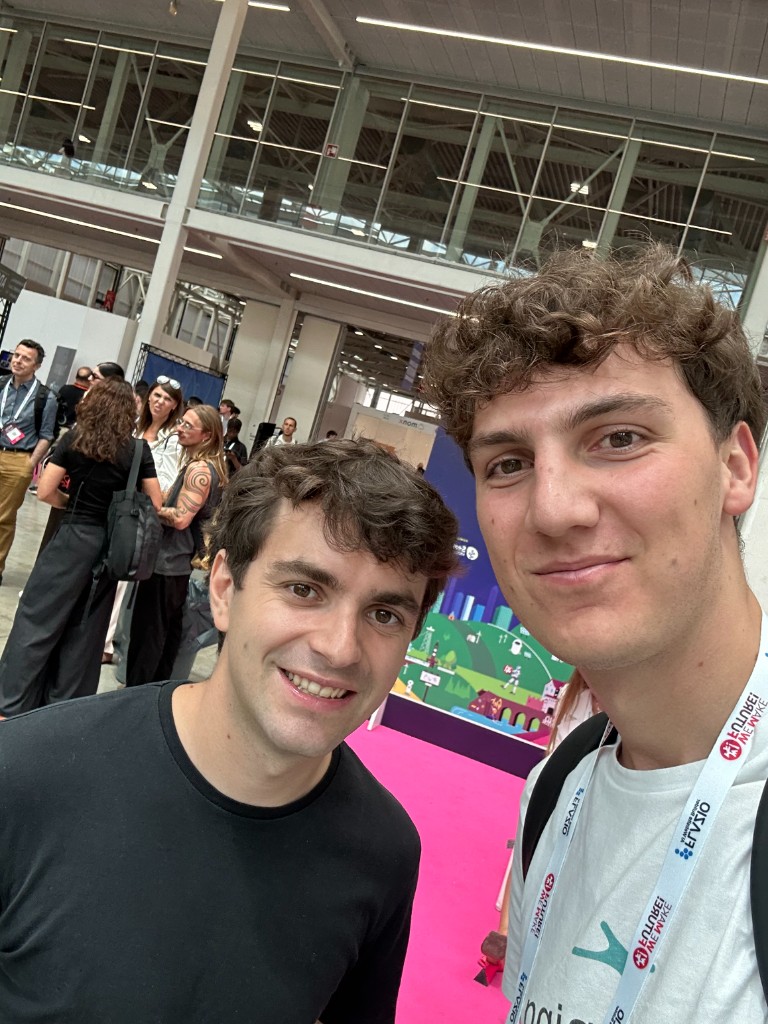
But it wasn’t just the famous faces. Throughout the day I found myself in conversations that started with a question about a demo and ended twenty minutes later with an exchange of ideas, contacts, and genuine enthusiasm. Founders explaining their product with the kind of energy you can’t fake. Engineers debating agent architectures in the hallway. Students asking questions that were sharper than half the panels.
That’s the thing WMF gets right. It’s not just consumption — keynotes in, notes out. It’s a place where people actually talk. Where you leave a conversation thinking about something differently than when you walked in.
Where It All Started
Tucked between the futuristic booths, there was a computer museum display that stopped me cold — an original Apple II with dual disk drives, a Macintosh, early handheld devices. Machines that defined an era, sitting a hundred meters from a humanoid robot.
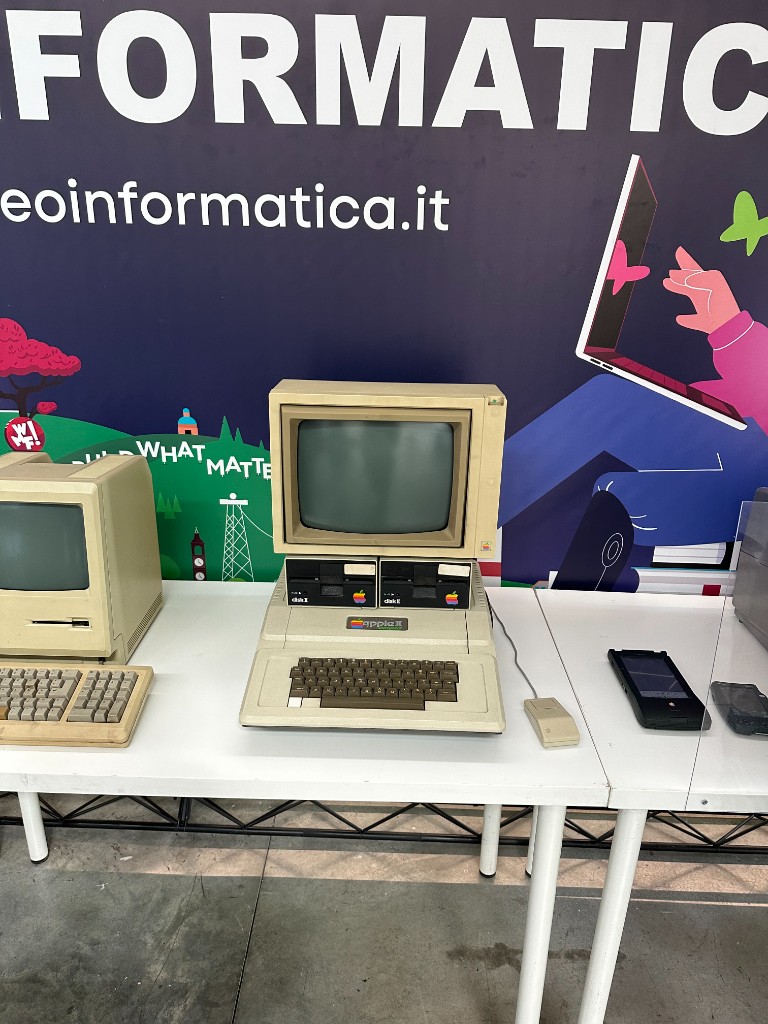
There’s a nice symmetry to that. WMF is about the future, but the future doesn’t appear from nowhere. Every Optimus on a convention floor stands on the shoulders of every Apple II that ever sat on a classroom desk. Seeing both in the same building, on the same day, felt like the whole story in one walk.
Takeaways
One day at WMF isn’t enough to absorb everything — the program alone has more stages than you could physically visit in a week. But one day is enough to get the pulse of it.
AI isn’t a trend here. It’s the infrastructure of the entire event — woven into marketing, commerce, robotics, health, law, tourism. The breadth is the point. This isn’t a niche conference for ML researchers. It’s a crossroads.
What I’m bringing home isn’t a single insight or a product demo. It’s the reminder that this work is social. That the ideas worth pursuing rarely come from sitting alone at a desk — they come from showing up, walking the floor, talking to strangers, and letting yourself be surprised.
Bologna, June 25th. Robots, creators, old computers, new ideas.
Good day. Worth writing about the next morning.